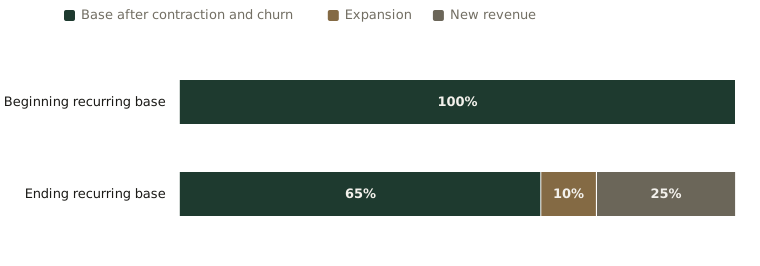
The synthetic recurring-revenue growth bridge
Reconcile the beginning recurring base to the ending base while keeping new, expanded, contracted, and lost revenue inside a declared period and currency.
Reference & Evidence
Source: Author's synthetic growth-accounting bridge grounded in Corrado, Hulten and Sichel (2009) and Hulten and Hao (2008). The revenue components and values are illustrative, not company data, a valuation, or a growth benchmark.
Each line is a claim from the register this journal publishes against, resolved from the register at build time.
- B Growth accounting reconciles a beginning recurring-revenue base to an ending base through new, expansion, contraction, and churn Author framework grounded in CHS09-C1 and CHS09-C2 ·
G04-OWN-C1 - B New, retained, expanded, contracted, and lost revenue are separate components under a declared period, currency, unit, and revenue boundary Author taxonomy ·
G04-OWN-C2 - B Ending recurring revenue equals beginning revenue plus new and expansion minus contraction and churn under the declared boundary Author identity ·
G04-OWN-C3
Grades: A, verified against the printed page of the primary source · B, primary source, text layer only · C, authoritative secondary · D, reported.
Related exhibits
-
What does a growth bridge look like?
From the essay What is growth accounting? Separate new, retained, expanded, and lost revenue
-
What does growth accounting mean?
From the essay What is growth accounting? Separate new, retained, expanded, and lost revenue
-
The synthetic revenue growth management composition
From the essay What is revenue growth management? Price, volume, mix, and margin in one system