← Every exhibit
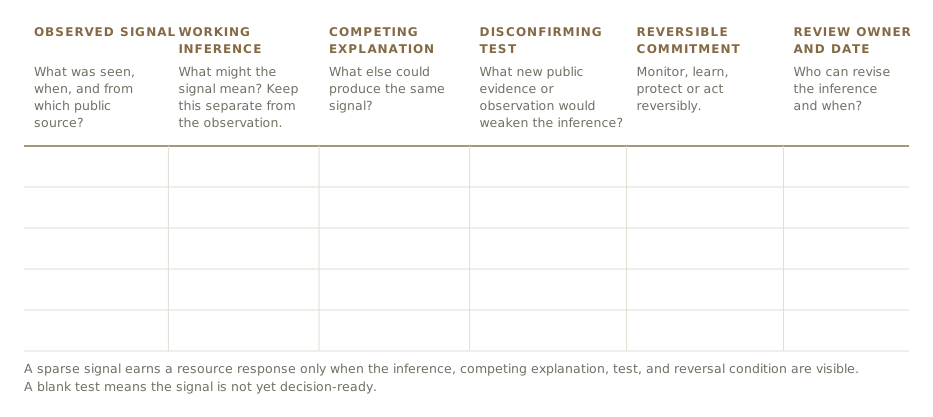
The sparse-signal decision sheet
Do not let a sparse signal carry a conclusion it cannot support. Record competing explanations, the test, and the smallest reversible resource commitment.
Reference & Evidence
Source: Author's decision worksheet grounded in Cavallo et al. (2021), Akerlof (1970), Goodman (1972), Phelps, Chan, and Kapsalis (2001), and Stein, Smith, and Lancioni (2013). The sheet is a bounded-inference framework, not a validated intelligence system.
Related exhibits
-
The foreign-market mode-fit screen
From the essay Foreign-market selection should compare mode-specific fit
-
The trigger-to-resource decision card
From the essay Scenario planning starts when a trigger moves a resource
-
Three questions before a number enters the decision
From the essay Evidence over anecdote: what a number has to survive.